


Open Bodybuilding


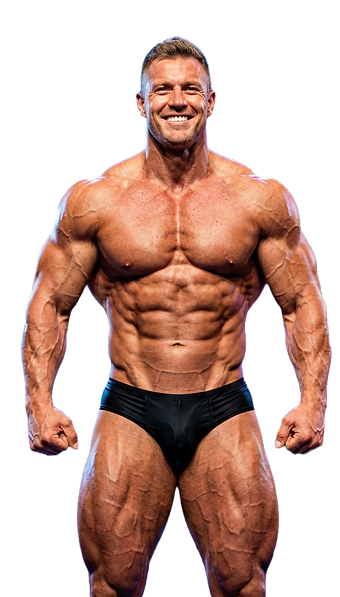

Open Bodybuilding
Bodybuilding Judging Criteria
1. Muscularity and Mass
Whilst size is important, it will always be evaluated relative to the athlete's frame and must not compromise proportion.
2. Conditioning
Competitors are expected to present at an exceptionally low body fat level, reflecting serious and dedicated competition preparation. Clear visibility of muscle separation, inter-muscular striations, and vascularity are key indicators of elite conditioning. The skin must sit close and tight to the muscle with no visible water retention beneath the surface.
3. Symmetry and Proportion
Both sides of the physique must demonstrate equal and balanced muscular development. The relationship between individual muscle groups is critical — upper and lower body development must complement each other, with no single area dominating or lagging noticeably behind. The physique as a whole should carry an aesthetic quality, ideally presenting a strong V-taper — width through the shoulders and upper back tapering into a tight, conditioned waist.
4. Presentation
Execution of mandatory and free poses must be deliberate and purposeful. Competitors who use posing effectively to showcase their strengths and minimise weaker areas will be rewarded. Ineffective posing will be reflected in the score. Skin tone, grooming, confidence on stage, and the ability to command the stage are all considered, particularly where scores between competitors are close.
5. Comparisons — Quarter Turns and Mandatory Poses
During the judging round, competitors will be assessed side by side through quarter turns and mandatory poses. This is where placements are decided. Judges will call comparisons to evaluate athletes directly against one another, rotating through quarter turns to assess the full physique from every angle before moving into the mandatory poses. Every position matters — competitors should remain switched on, held tight, and presenting at their best at all times during this round, not only when they are the direct focus of the comparison.
6. Posing Routine — 1 Minute
Each competitor will perform a one-minute individual routine. This is your opportunity to go beyond the mandatory round and show the judges who you are on stage. We are looking for more than a physique — we are looking for an athlete who understands their body, commands the stage, and delivers a performance that is as compelling to watch as it is effective at displaying their condition.
Your routine should demonstrate muscularity and definition whilst reflecting your individual style and personality. Choreography does not need to be complex, but it must be intentional. Poses should flow naturally from one to the next, and every moment on stage should serve a purpose. Athletes who use their routine to highlight their strongest assets and present their physique with genuine stage presence will score higher than those who simply move through poses without conviction.
Attire
Competitors must wear posing briefs of any colour. Briefs must provide appropriate coverage — some of the glutes must be covered and full coverage of the front is required. G-strings and posing pouches are not permitted.
Mandatory Poses
All competitors are required to perform the following mandatory poses during the judging round:
-
Front Double
-
Biceps Front
-
Lat Spread
-
Side Chest
-
Back Double Biceps
-
Back Lat Spread
-
Side Triceps
-
Abdominals and Thighs
-
Most Muscular
ALL COMPETITORS PERFORM AN "I-WALK"
GymBodyz Sports & Fitness Gala
"Where Sports & Fitness Meet"
NEXT GALA: Halloween Gala
Date: Sunday 1st November 2026
Show Time: 12.45pm-8pm
Location: The Venue Theatre
Milton Keynes
MK7 7WH


